Roblox's 4D Generation Is Here and It Could Change How Players Build Forever
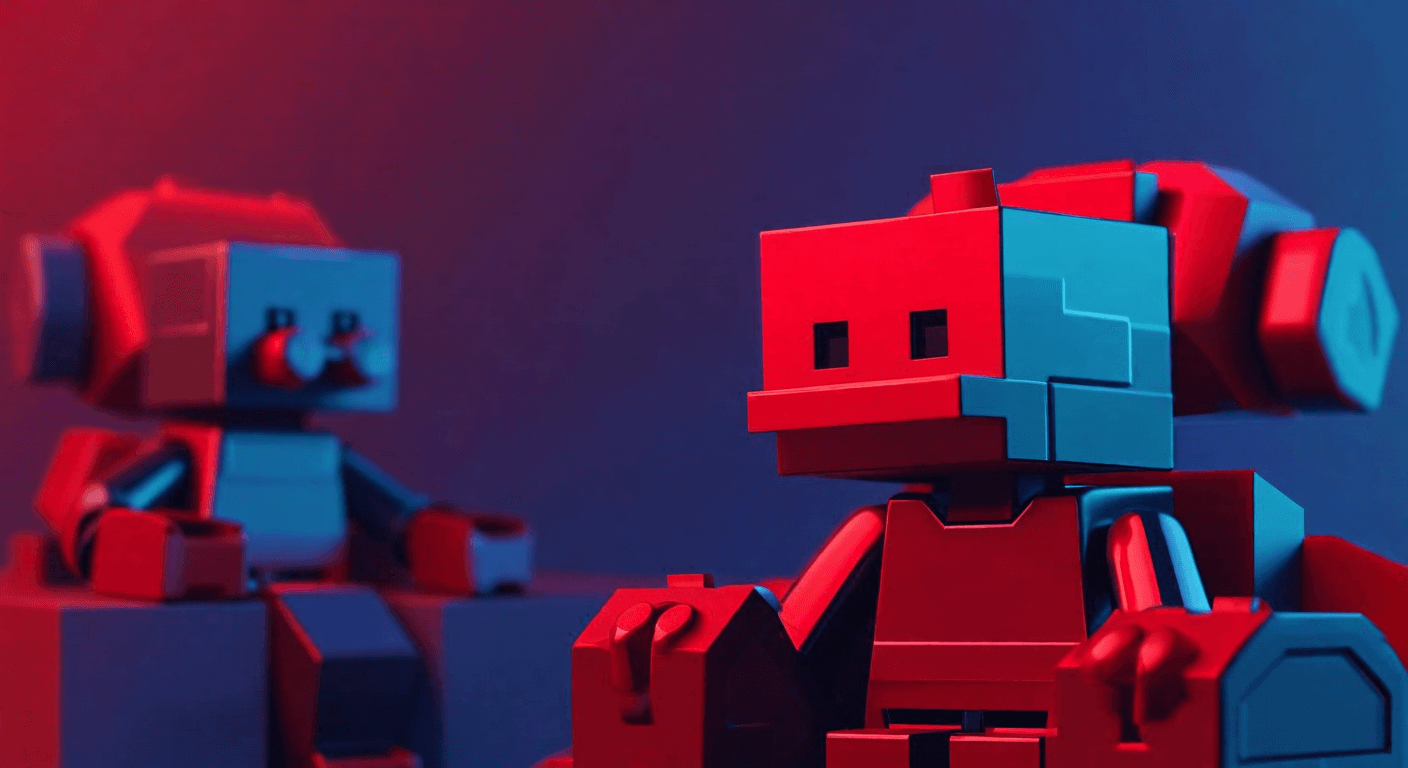
Roblox just made a move that quietly redefines what "player creativity" means on the platform. According to the official Roblox newsroom, the company has entered beta with something it's calling 4D generation — a significant evolution of its Cube Foundation Model that goes far beyond generating static 3D objects. We're now talking about fully functional, interactive items conjured from nothing but a text prompt. Type a description, get a working car. Not a prop. A car you can actually get into and drive. That's the pitch, and honestly, it's a compelling one worth taking seriously.
This isn't vaporware buried in a developer conference presentation. It's live in beta, it's already been tested in real experiences, and the early data is striking enough to warrant a closer look. Whether you're a player who spends hours exploring the best Roblox games or a developer trying to figure out where the platform is heading, 4D generation deserves your attention right now.
What Exactly Is Roblox's 4D Generation?
Roblox's 4D generation is a technology built on top of the Cube Foundation Model that allows players and creators to generate fully functional, interactive objects using simple text prompts — not just static meshes or visual assets. The "4th dimension" here isn't time in the physics sense; it's functionality. Behavior. The ability for a generated object to actually do something in the game world.
Roblox built its Cube Foundation Model originally to handle 3D object generation, but the roadmap always pointed toward something more ambitious: full scene generation and interactive environments. The 4D beta is the next waypoint on that journey. Under the hood, the system uses structured rulesets called schemas to break a requested object down into component parts and then layers on behavioral logic that makes those parts work together. It's not just rendering a car shape — it's building a vehicle with drivable mechanics.
For developers, this changes the creation pipeline in a fundamental way. Instead of scripting behavior manually or commissioning custom assets, they can enable 4D generation inside their experience and hand some of that creative power directly to the players themselves. That's a meaningful shift in how Roblox experiences are authored, and it's one that opens up design possibilities that simply didn't exist a year ago.
How Does the Schema System Actually Work?
The schema system is the architectural backbone of 4D generation, acting as a structured ruleset that deconstructs complex objects into logical parts and assigns functional behaviors to each one. Think of schemas as templates that Roblox has defined for categories of objects — vehicles, creatures, aircraft — that tell the model how a given type of thing should be assembled and how it should behave once it's in the world.
When a player types a prompt requesting a flying dragon, the system doesn't just generate a dragon-shaped mesh. It references the relevant schema, figures out what components a flying creature needs, generates those parts, and attaches the behaviors that make the creature actually fly. The generated object is functional by design, not by accident. This is what separates 4D generation from a glorified asset importer.
The implications for game design here are pretty significant. Creators who enable this feature aren't just adding a generation tool to their game — they're essentially delegating a portion of game design to an AI model that understands context and functionality. That's a big deal, and it comes with both exciting possibilities and questions about quality control that we'll get into shortly.
Who Is Already Using This — and What Are the Numbers?
Is There Real-World Evidence That 4D Generation Works?
Yes — and the data from early testing is genuinely impressive. Developer Laksh integrated 4D generation into his Roblox experience Wish Master during early access, and players generated over 160,000 objects using the feature during that testing period alone. More tellingly, players who engaged with 4D generation showed a 64% average increase in playtime within the game.
That 64% figure is the kind of engagement number that makes product teams at any gaming company sit up straight. Increased playtime is the metric that feeds everything downstream — monetization, retention, word-of-mouth. The fact that a single feature toggle drove that kind of change in player behavior is not a coincidence. It suggests that giving players generative creative tools creates a fundamentally more engaging loop than passive gameplay alone.
Wish Master's concept is almost tailor-made for this technology — players can wish for anything and watch it appear in the game world. Laksh has built three tiers of generation into the experience: Basic, Pro, and 4D generation. Players have used these tools to generate driveable cars, flyable planes, and even animated dragons. The breadth of what players chose to create during early access speaks to how open-ended the system actually is when given room to breathe.
What Challenges Did Developers Face During Testing?
Natural language interpretation was the primary friction point, according to Laksh. Players would request objects that didn't have clean equivalents in the real world, or phrase their wishes in ways the system hadn't been trained to anticipate. Getting the model to understand intent — not just the literal words — required continuous iteration.
This is a challenge that anyone who has used AI generation tools will recognize immediately. The gap between what a user types and what they actually want is a fundamental UX problem in this space. Roblox and developers like Laksh are actively working on it, but it's worth flagging for players going in: the system is in beta, and results will vary. Expect the unexpected, and not always in the good way.
That said, Laksh's framing of the challenge is optimistic — and probably accurate. Players experimenting with edge cases and unexpected inputs is actually how these systems get better. The 160,000 objects generated during early access represent an enormous dataset of real player intent that Roblox can use to improve schema coverage and model accuracy going forward. Beta here is doing real work, not just functioning as a PR label.
Why This Matters for Players
For the average Roblox player, 4D generation represents a genuine expansion of creative agency inside experiences they already love — or might soon discover. This isn't a developer-only tool hidden behind Studio; it's designed to be surfaced directly to players inside games, making creation accessible to anyone who can type a sentence.
Consider what this means for the kinds of sandbox and adventure games that already dominate Roblox's most-played charts. Games like Grow a Garden and Roblox horror titles could benefit enormously from player-generated content tools. If you've spent time with any of the best Roblox games on the platform, you know that the most magnetic experiences are the ones that make you feel like your actions matter and your creativity has an outlet. 4D generation supercharges that feeling by making the player an active co-author of the game world in real time.
There's also a meaningful accessibility angle here. Not every Roblox player has the scripting knowledge or the time to build in Studio. 4D generation lowers the floor for creative expression dramatically. A kid who has never opened a code editor can now generate a functional vehicle through a text box and use it in a game. That's a profound democratization of game creation, and it's happening on a platform that already has hundreds of millions of users.
For those who enjoy hunting through the platform's more experimental experiences, this technology could give rise to an entirely new genre of Roblox game — ones where the game world itself is partly player-generated and constantly changing. Keep an eye on our Roblox news coverage for breakdowns of new experiences that launch with 4D generation enabled. This is going to move fast. Subscribe to our newsletter for updates as these tools evolve.
What About Developer Opportunities?
For developers, the calculus here is straightforward: 4D generation can increase player engagement significantly without requiring a proportional increase in development effort. The 64% playtime increase Laksh observed in Wish Master didn't come from him adding more levels or content — it came from handing players a tool. That's an extraordinary return on integration effort, assuming the system matures reliably.
Laksh's roadmap for Wish Master includes even more AI-driven features: an outfit generation model, a dedicated build mode, and a PvP component. It's a sign that developers who adopt early are already thinking about how to layer multiple generative systems together into richer experiences. The platform's most forward-thinking creators aren't waiting to see if this works — they're already building on top of it.
If you're a developer looking to understand how to get started with Roblox's creation tools, our Roblox guides section covers Studio fundamentals and will be expanding to cover AI-assisted creation as these tools roll out more broadly. The barrier to entry for building compelling Roblox experiences is getting lower, and now is a genuinely good time to start experimenting.
What We Think
Roblox's 4D generation is the most interesting thing the platform has announced in years — not because it's flashy, but because it's quietly structural. This isn't a new game mode or a cosmetics update. It's a change to the fundamental relationship between players, creators, and the game world. When players become co-authors of the experiences they're inhabiting, those experiences become stickier, more personal, and harder to replicate anywhere else.
The 64% playtime increase from a single beta feature should be setting off alarm bells — the good kind — inside every major gaming platform's product team. Roblox has always competed on user-generated content, but there's historically been a hard wall between players and creators. 4D generation starts dismantling that wall, and that's a genuinely meaningful competitive advantage if Roblox can execute at scale.
Our concern, as always, is the gap between beta promise and production reality. Natural language interpretation in games is still a messy problem. Schema coverage will be limited to whatever object categories Roblox has prioritized. And there are moderation questions — what happens when players start generating objects designed to disrupt or exploit an experience? — that haven't been fully answered in public documentation yet.
But those are solvable problems, and Roblox has the scale to solve them. The direction here is right. If 4D generation reaches maturity and becomes a standard part of the developer toolkit, the experiences that get built on top of it could represent some of the most creative and engaging content the platform has ever hosted. We'll be watching this closely — and you should be too. Stay tuned to our gaming news coverage for ongoing updates as the beta expands.
Frequently Asked Questions
What is Roblox 4D generation and how is it different from 3D generation?
Roblox 4D generation is an evolution of the platform's Cube Foundation Model that allows players and developers to generate fully functional, interactive objects from text prompts — not just static visual assets. While 3D generation produces shapes and meshes, 4D generation adds behavioral logic, meaning a generated car doesn't just look like a car: it drives like one. The system uses structured rulesets called schemas to break objects into parts and attach the appropriate functionality to each component.
Can regular players use 4D generation, or is it only for developers?
Regular players can use 4D generation directly inside Roblox experiences — but only when a developer has chosen to enable it in their game. When activated, players can enter a simple text prompt and generate a fully functional object within the experience. Wish Master is one of the first public examples of this being available to general players, where users have already generated over 160,000 objects during early access testing.
How much does 4D generation increase player engagement?
Based on early access data from the game Wish Master, players who engaged with 4D generation showed an average 64% increase in playtime compared to those who didn't use the feature. This is a significant engagement lift for a single feature integration, and it suggests that generative tools meaningfully deepen player investment in an experience. These numbers come from developer Laksh's testing period before the broader beta announcement.
Is Roblox's 4D generation available to all developers right now?
As of early February 2026, Roblox's 4D generation is in beta, meaning access is limited and the feature is still being refined. Developers like Laksh have been involved in testing ahead of the broader rollout. Roblox has indicated that 4D generation is part of a larger roadmap for the Cube Foundation Model that eventually includes full scene generation, so expect the feature set to expand significantly over the coming months. Check our Roblox news page for updates as the beta opens to more creators.
What kinds of objects can be generated with Roblox 4D generation?
During early access testing in Wish Master, players generated a wide range of functional objects including cars, planes, and flying dragons — all of which behaved as expected within the game world. The range of supported object types depends on which schemas Roblox has built into the Cube Foundation Model, and that library is expected to grow over time. Complex or unusual requests can sometimes produce unexpected results, particularly when phrased in ways the model hasn't encountered, which is an area Roblox and developers are actively improving.