For several years now, one formula has shaped Roblox horror: a numbered run of rooms, a door at the end of each one, and something fast coming down the corridor behind you. Doors made that loop famous, and a long line of imitators has copied it with varying degrees of care.
Pressure is one of the few that took the formula somewhere genuinely new by moving it into a flooded research facility at the bottom of the ocean. The result plays like a survival budget: every locker, every battery, and every second of silence is a resource you either spend wisely or lose.
Pressure belongs in any serious October horror rotation. Here's why its entity design, locker-and-light economy, and sound cues work as well as they do, and where they stumble.
What Is Pressure On Roblox?
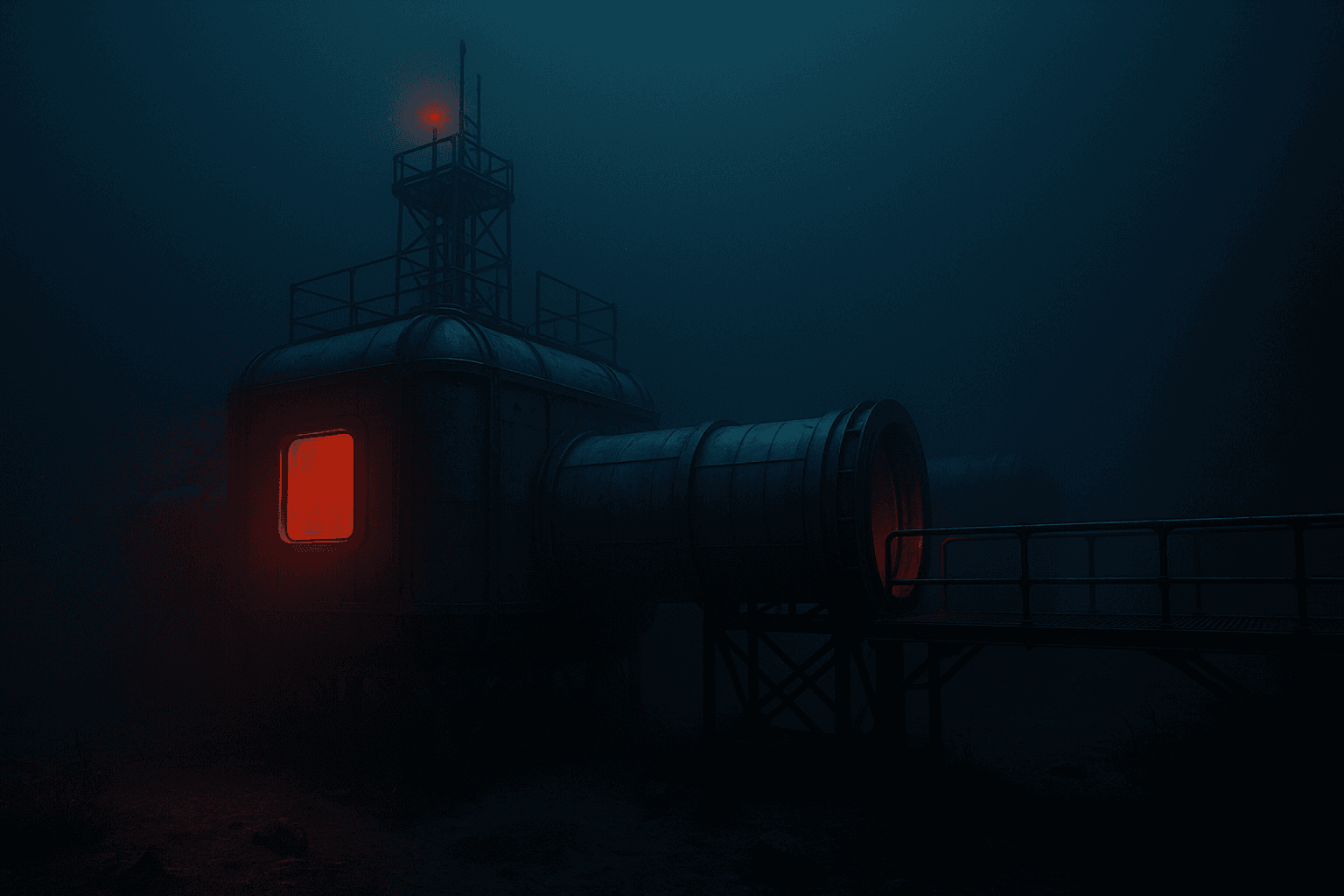
Pressure is a first-person horror experience set inside the Hadal Blacksite, a deep-sea facility run by the fictional Urbanshade corporation. Players descend as expendable workers and move room by room through flooded corridors, labs, and maintenance tunnels while hostile entities hunt them.
Pressure is a Roblox room-crawl horror game set in Urbanshade's Hadal Blacksite, a deep-sea facility. Players push through numbered rooms, hiding in lockers and managing light while entities hunt them.
Keep in mind that the game borrows its skeleton openly. If you've played Doors, the basic loop of opening a door, scanning a room, and listening for trouble will feel familiar within the first minute.
That said, the familiarity is a setup. Pressure uses it to teach you rules it later bends, and the deeper you go, the further its systems drift from the template.
How Pressure Reworks The Room-Crawl Formula
The classic room-crawl has a simple tension curve: walk, hear a warning, hide, repeat. It works, but it flattens over a long run because players learn that hiding is always free.
Pressure goes straight at that assumption. Hiding spots, light sources, and safe moments all carry a cost, which turns each room into a small decision about what to spend now and what to save for later.
Pressure adds cost to the room-crawl loop. Hiding spots, light, and quiet moments are limited, so each room becomes a choice about what to spend now and what to save for later.
Here's how the game's four core systems fit together:
- Entities. Each threat targets a different behavior (moving, looking, lighting, or hiding), so no single habit keeps you alive.
- Lockers. Hiding is the main answer to rush-type entities, yet the right locker is rarely in the right place.
- Light. Darkness hides threats and puzzle details alike, and light sources run on limited power.
- Sound. Audio carries most of the warning information and often arrives before anything appears on screen.
All of these systems interlock. A dark room makes sound cues more important, sound cues send you toward a locker, and the locker leaves you blind to whatever is happening outside it.
Entity Design: Every Monster Tests A Different Habit
The strongest design decision in Pressure is that its entities do not all ask for the same response. A Doors veteran's instinct is to sprint for cover at the first sign of trouble, and Pressure deliberately punishes that reflex in some encounters.
The Angler Family
The Angler is the game's signature rush entity. Lights flicker, a distorted roar builds through the corridors, and anyone who isn't tucked inside a locker when it passes is finished.
The Angler is Pressure's signature rush entity. Flickering lights and a building roar signal its approach, and players must be inside a locker before it sweeps through the room.
What makes the family interesting is the variants. Pinkie, Froger, Chainsmoker, and Blitz each tweak the rhythm, whether that means the length of the warning, the speed of the pass, or whether the threat is truly over once it goes by.
As a result, a player who memorizes one timing gets caught by the next. The family teaches pattern recognition first and then tests whether you have actually learned it.
Pandemonium
Pandemonium is where the locker stops being a guaranteed safe room. Surviving it means holding your nerve through a minigame inside the locker, which turns a passive hide into an active test of focus.
This is the moment the game breaks its own rule on purpose. Players who have treated lockers as automatic safety discover that the hiding spot itself can become the danger.
Eyefestation And The Watchers
Eyefestation moves the problem from movement to attention. Looking at it is what hurts you, so the correct response is to look away and keep working, which feels deeply uncomfortable in a game that otherwise rewards constant vigilance.
Other encounters in the dark sections, such as Squiddles, punish careless use of light. Together, these entities make players think about where their camera points and what their flashlight touches, in addition to where their feet go.
The comparison below summarizes how the main threat types differ in what they test and how players counter them:
| Entity | Primary Tell | What It Tests | Core Counter |
|---|---|---|---|
| Angler | Flickering lights and a building roar | Reaction time | Reach a locker before it passes |
| Angler variants (Pinkie, Froger, Chainsmoker, Blitz) | Altered warning timing and audio | Pattern memory | Identify the variant and wait before leaving cover |
| Pandemonium | Distinct approach audio | Composure | Complete the locker minigame |
| Eyefestation | Visible presence in the room | Attention discipline | Keep your camera off it |
| Squiddles | Dark rooms | Light discipline | Control where your light lands |
Overall, the roster works because no single habit ever becomes a universal answer. That principle sits at the center of our broader breakdown of Roblox horror game design, and Pressure is one of its cleanest examples.
The Locker Economy
Lockers in Pressure are scattered unevenly, and that uneven distribution is the point. Some rooms offer several, some offer one tucked into a far corner, and some long corridors offer nothing at all.
Lockers protect you from rush entities like the Angler, but they are unevenly placed and block your view. Smart players plan routes that keep a locker within a few seconds' reach.
Players quickly learn to read rooms for hiding spots before they read them for loot. Remember that the safest route through a room is the one that keeps a locker within a few seconds of you at all times.
Multiplayer sharpens this further. When a lobby splits up to search for keycards or codes, lockers become shared resources, and a group that scatters too widely can find itself one hiding spot short when the lights start to flicker.
Hiding also costs you information. Inside a locker you see very little, so every hide trades awareness for safety, and Pandemonium exists precisely to make that trade feel risky.
The Light Economy
Darkness in Pressure is both atmosphere and mechanic. Large stretches of the facility lose power, and the dark rooms hide puzzle details, loot, and threats in roughly equal measure.
Light sources run on limited power, so a flashlight left on all the time is a flashlight that dies at the worst possible moment. Players who treat battery life like ammunition, with short bursts to check a corner and then off again, tend to go deeper than those who leave the beam running.
Light in Pressure is limited and sometimes risky. Flashlights drain power and some entities react to light, so short, deliberate bursts outlast leaving the beam on.
What's more, light carries consequences of its own. Some threats react to it, which turns every dark section into a tense negotiation between seeing and being noticed.
Sebastian, the facility's resident shopkeeper, ties the economy together. Currency gathered during runs buys gear, so collecting supplies early directly funds your survival later.
Sound Cues: Listening Is The Real Skill
Pressure is a game you play with your ears. Most threats announce themselves through audio first, whether a rising roar, a distorted shriek, or a shift in the ambient hum, and the visual confirmation often arrives too late to act on.
Sound is Pressure's main warning system. Threats like the Angler announce themselves through audio before they appear, so headphones and learning each roar buy critical seconds.
The sound design layers these cues over a constant underwater ambience of creaking metal, dripping water, and distant groans from the hull. That said, the warnings are tuned to cut through, which rewards players who learn to separate background noise from a real signal.
Here's a list of the audio habits that consistently pay off:
- Play with headphones. Directional audio tells you which side a threat is coming from, and speakers flatten that information.
- Learn each roar. The Angler variants sound distinct, and recognizing them early buys the seconds you need to reach a locker.
- Pause after hiding. Leaving a locker the instant the noise fades is exactly how the trickier variants catch players.
- Call cues out loud in groups. The first player to hear a warning should say so, since teammates in another room may not catch it.
All of these habits come down to treating audio as information. The players who survive longest are usually the ones listening hardest.
Puzzles Keep You Exposed
Progress through the Blacksite often depends on finding keycards, reading codes, or working through small environmental puzzles. Each one is designed to hold you in a room longer than you would like.
This is because time spent searching is time spent exposed. A puzzle in a lit room with two lockers is a breather, while the same puzzle in a dark corridor with no hiding spot becomes one of the tensest moments in the run.
Accordingly, groups tend to divide the labor. One player searches, one watches the door and listens, and one stays near the closest locker, a role split that mirrors how the best survival Roblox games distribute tasks.
Why The Underwater Setting Works
The Hadal Blacksite setting carries real mechanical weight. Water-stained corridors, failing hatches, and the constant sense of crushing depth reinforce the game's central idea that everything down here is running out: air, power, time, and luck.
In fact, the setting justifies the systems. Flickering lights make sense in a facility under that much strain, and scarce hiding spots fit a station that was never built for anyone to hide in.
This coherence is what separates Pressure from many room-crawl imitators. Set it beside the folklore dread of The Rake on Roblox or the uncanny brightness of mascot horror, and Pressure's industrial, claustrophobic identity stands out clearly.
Early, Mid, And Late Run Priorities
Your early rooms decide how much margin you have later. Because the economy carries forward, a careless opening stretch means arriving at the harder sections short on light and currency.
The checklists below reflect how the game's demands shift as you descend:
Early Run Mini-Checklist:
- Collect supplies and currency aggressively while threats are lighter.
- Learn the Angler's warning until your reaction becomes automatic.
- Scan each room for its nearest locker the moment you enter.
Mid Run Mini-Checklist:
- Ration flashlight use to short bursts in dark sections.
- Expect variants and wait a beat before leaving a locker.
- Stay within earshot of teammates while hunting keycards and codes.
Late Run Mini-Checklist:
- Spend saved currency on gear before the hardest stretches.
- Treat every hide as a possible Pandemonium test and stay composed.
- Keep your camera disciplined around watcher-type entities.
Note that Pressure receives regular updates, so entity behavior and item details can shift between patches. Checking the game's official channels before a long session is a good habit.
Where Pressure Stumbles
No design is perfect, and Pressure has rough edges. Its difficulty spike can feel abrupt for newcomers, and some deaths feel unfair the first time because the warning was audio-only and easy to miss in a noisy room.
Moreover, the game leans on dark visuals that look very different depending on screen and brightness settings. Players on phones or dim displays may find some sections harder than intended, which is worth knowing before you judge the difficulty.
Still, these are the costs of a game committed to its systems. The frustration mostly fades once players accept that listening and planning are the skills being tested.
Is Pressure Worth Playing This October?
Yes. Pressure is one of the most thoughtfully designed horror experiences on Roblox, and it rewards patience more than reflexes.
Pressure is worth playing for fans of tense, system-driven horror. It rewards patient listening and resource planning more than fast reflexes, which suits long October sessions.
If you are building a seasonal rotation, start with our roundup of the best horror Roblox games, then browse the Roblox fall games preview for what's new this season. Our indie horror tracker also follows smaller releases worth a look once you've surfaced from the Blacksite.