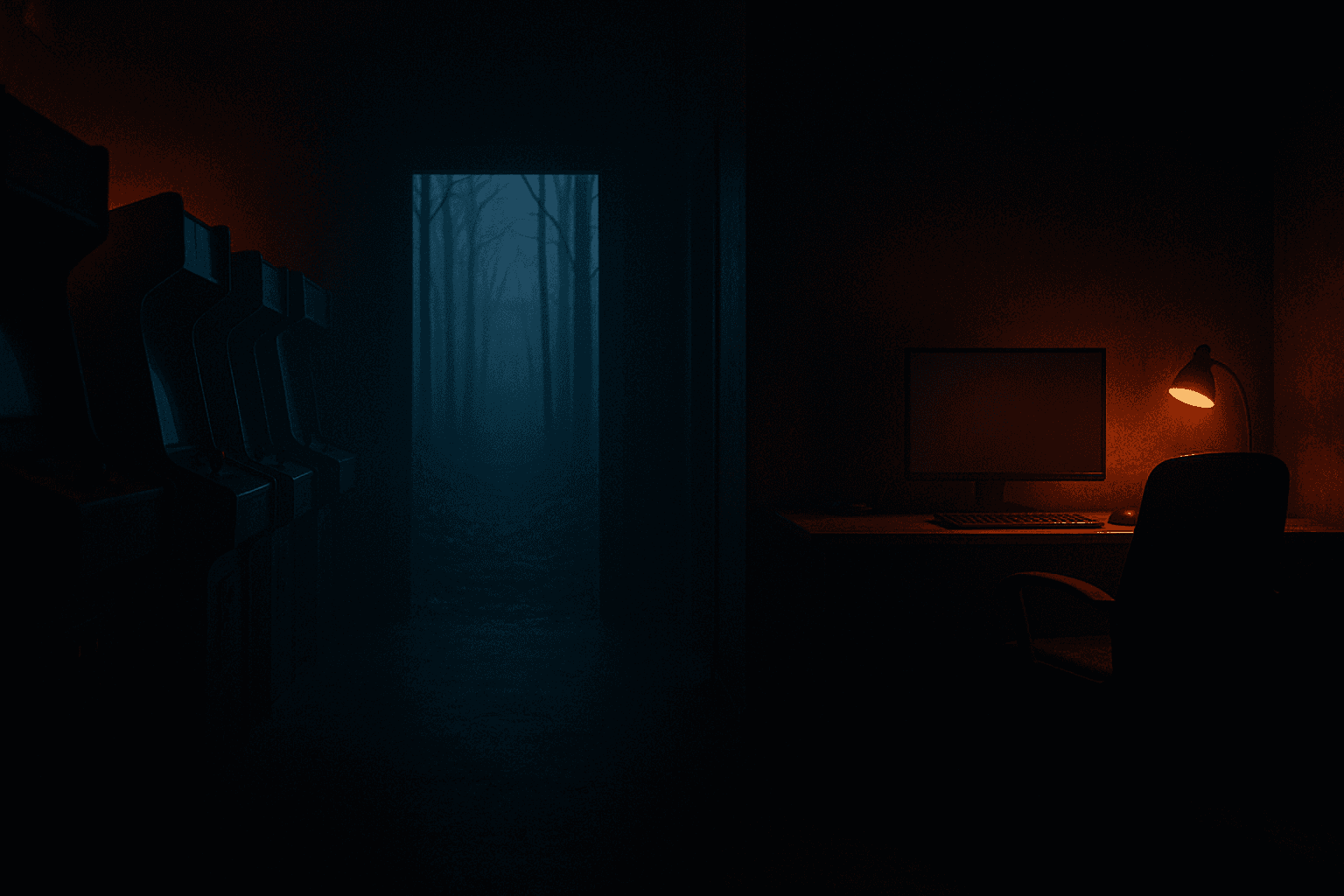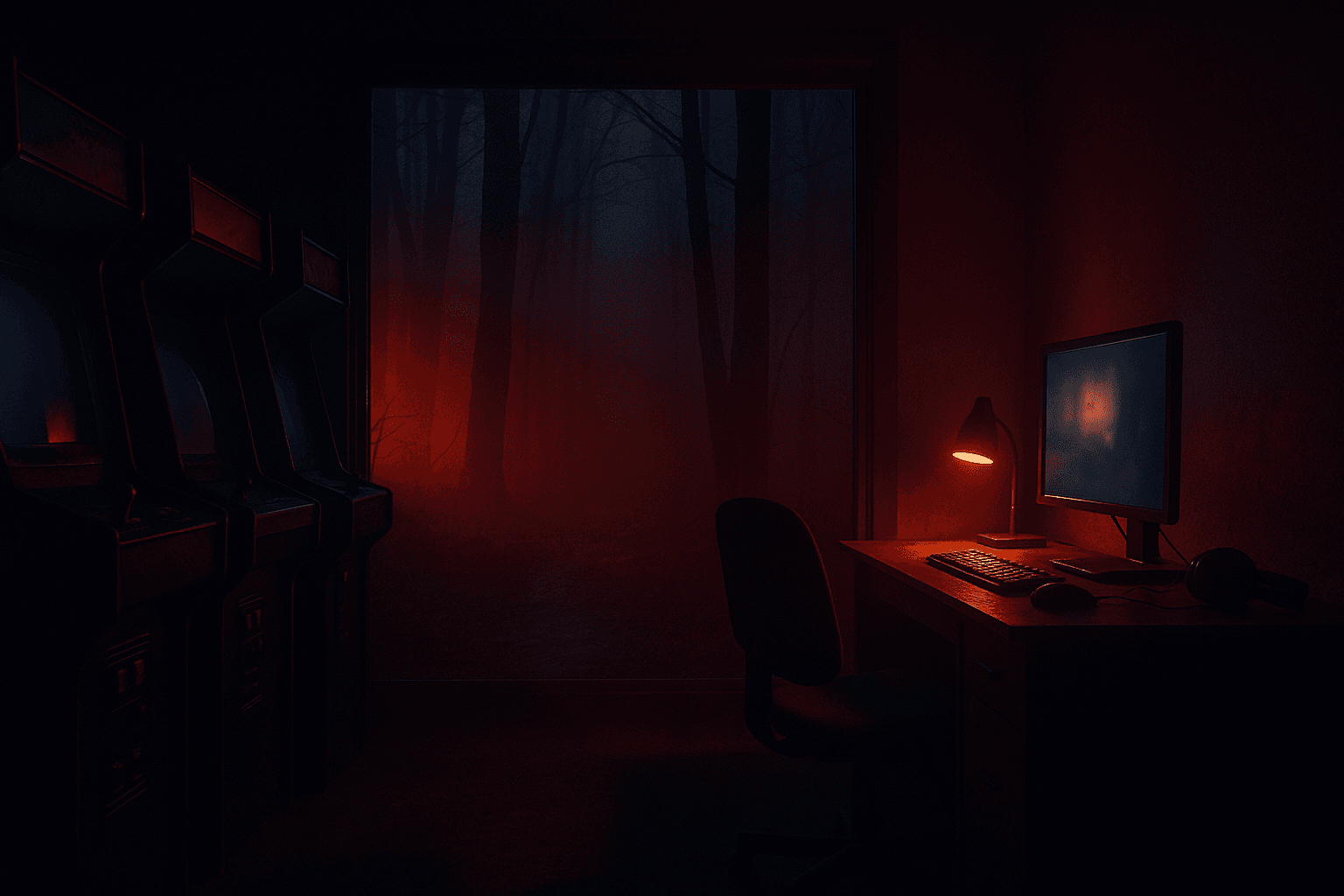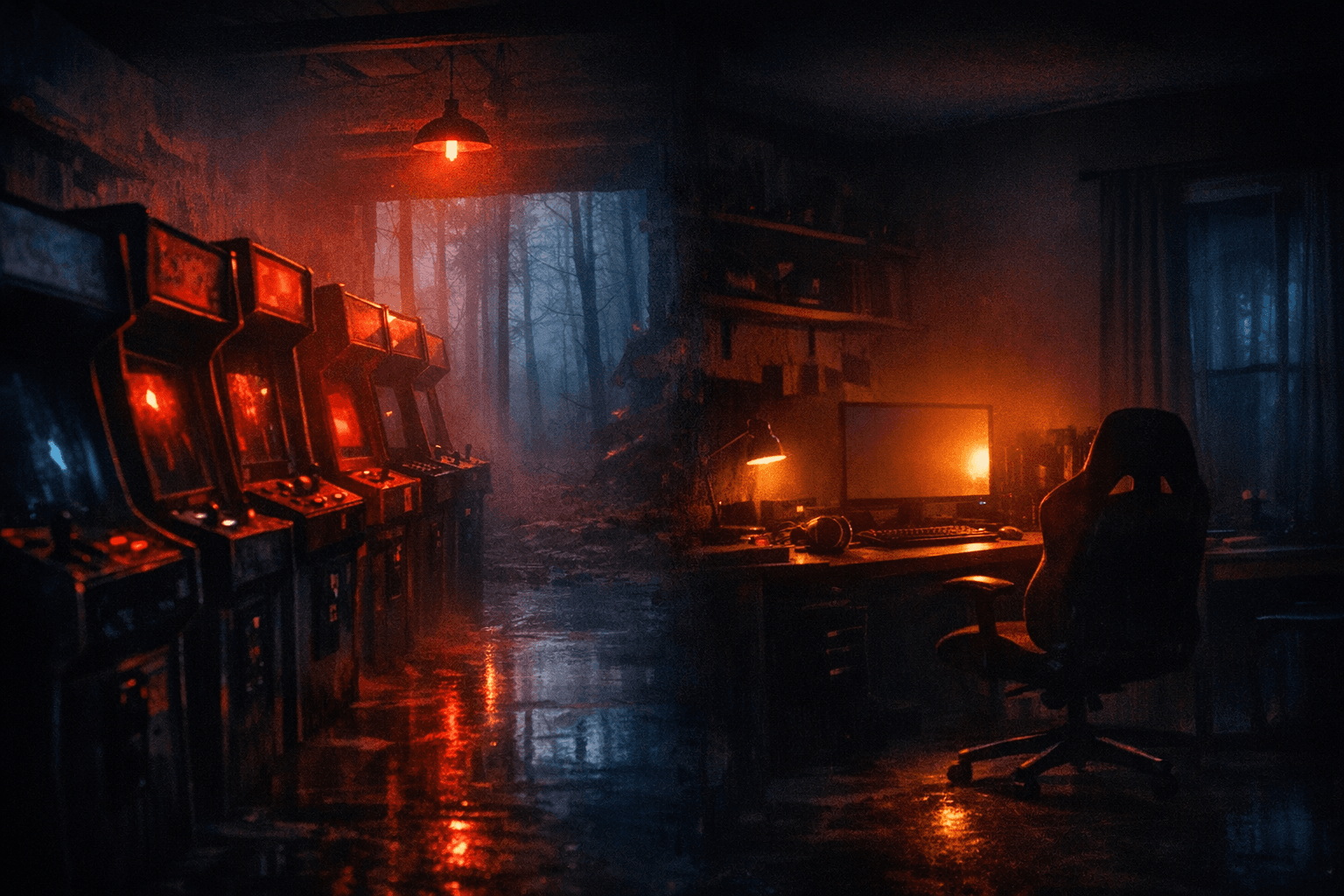
Social deduction is one of the oldest ideas in party gaming, from parlor games played around a kitchen table to the voice-chat accusations that filled Among Us lobbies a few years ago. Flicker brings that idea to Roblox and wraps it in a horror shell, where every blackout ends with a body on the floor and every daylight round ends with a vote.
That combination gives Flicker a kind of fear our guide to the fear types in Roblox horror has not covered yet. The monster in this game is one of the players in your lobby, and you won't know which one until it is too late — or until the group votes out the wrong person.
Flicker is a Roblox social-deduction horror game from JJ Studios. A hidden murderer kills during each blackout, and survivors use discussion and daytime votes to find and eliminate the killer before they are outnumbered.
What Is Flicker On Roblox?
Flicker is a multiplayer whodunit built by JJ Studios, a Roblox group that has supported the game with updates and community player guides on the Roblox developer forum. Each match drops a lobby of players into a shared space, quietly hands out secret roles, and then lets the lights decide the pace.
Most players are innocents trying to survive and identify the killer. However, at least one player is the murderer, and that player looks and talks exactly like everyone else until the power cuts out.
Flicker sits closer to a tabletop game like Mafia or Werewolf than to a chase game. Accordingly, your survival depends far less on reflexes and far more on what you notice, what you say, and whom you choose to believe.
How A Round Of Flicker Plays Out
A round of Flicker moves through a repeating loop, and each pass through that loop shrinks the lobby. Here's how a typical match unfolds:
- Role assignment. Every player privately receives a role at the start of the match. Only you see yours, which means every other character on screen is a question mark from the first second.
- Daylight exploration. Players move around, complete tasks, and talk in chat. This is where alibis form, because whoever was standing next to you is your best evidence later.
- The blackout. The lights flicker and go dark, and the murderer gets a window to strike. Special roles with night abilities use them during this phase as well.
- The discovery. When the lights return, the lobby learns who is gone. Naturally, this is the moment when accusations start flying.
- Discussion and vote. Survivors argue their case and vote on who to eliminate. A wrong vote removes an innocent and hands the murderer a free kill.
The loop then repeats until one side wins. In other words, the innocents need to vote out the murderer before the murderer thins the group to the point where a vote can no longer stop them.
Each Flicker round cycles through exploration, a blackout when the murderer strikes, a body discovery, and a group vote. The loop repeats until survivors vote out the killer or the killer outlasts them.
The Roles: Who You Might Be Standing Next To
Roles are what give Flicker its depth, because each one changes what you know and what you can do during the dark. Keep in mind that JJ Studios adjusts the role list between updates and game modes, and third-party guides often disagree on the exact lineup, so check the in-game role menu before you rely on any list.
That said, the roles below are among the most commonly documented in community and developer guides. The table sorts them by team and by the tell other players tend to watch for.
| Role | Team | What It Does | What Others Watch For |
|---|---|---|---|
| Murderer | Evil | Kills a player during each blackout while hiding among the innocents. | Vague alibis, eagerness to rush a vote, or steering suspicion onto quiet players. |
| Sheriff | Innocent | Holds the power to act directly against a suspect, which makes a wrong call costly. | Confidence that outpaces the evidence. |
| Doctor | Innocent | Protects one player from elimination during the blackout phase. | A "saved" player who survives a night they should not have. |
| Detective | Innocent | Investigates players to build a case against the murderer. | Specific claims that only an investigator could know. |
| Psychic / Stalker | Varies by mode | Information roles that reveal pieces of what happened during the dark. | Hints dropped carefully to avoid becoming the next target. |
| Clown | Neutral | Wins only by getting voted out during the day. | Suspicious behavior that seems a little too obvious. |
| Twin | Neutral | Wins by surviving alongside a paired partner. | Two players who defend each other without explaining why. |
The neutral roles are where Flicker becomes genuinely devious. After all, a Clown who wants to be voted out behaves almost exactly like a guilty player, which forces the group to ask whether suspicious behavior is a confession or a trap.
Flicker's documented roles include the Murderer, Sheriff, Doctor, Detective, and information roles, plus neutral roles like the Clown and Twin. The exact list changes by update and mode, so check the in-game menu.
Why The Lights Going Out Is The Scariest Part
Most Roblox horror games build dread through something you can see coming, whether that's a mascot rounding a corner or a monster's footsteps echoing down a hallway. Flicker strips that away and replaces it with a few seconds of total uncertainty.
When the screen goes dark, you have no way to defend yourself and no idea whether you are the target. As a result, every blackout carries the same question for every innocent in the lobby: is this the round where it's me?
What's more, the fear doesn't end when the lights come back on. The tension shifts from "will I survive the dark?" to "who among us did this?", and that second question lasts far longer than any jump scare.
Flicker's horror comes in two waves. The blackout delivers a short, sharp spike of helplessness, and the vote that follows stretches into a longer, social dread where your friends become your suspects.
Distrust As A Horror Mechanic
The angle that makes Flicker worth a deep dive is that it turns social trust into the thing you fear. In most horror, the group is the safe place and the threat lives outside it; in Flicker, the threat lives inside the group, wearing an avatar you have been chatting with for ten minutes.
Several design choices push that distrust to the front of every match. Some of the most effective include:
- Hidden information. Because only you know your own role, every statement from every other player is unverified. Even a true claim can sound like a lie when the stakes are your survival.
- Player-driven punishment. The game doesn't eliminate innocents by mistake; the lobby does. Therefore, every wrong vote feels like a collective failure rather than bad luck.
- Roles that mimic guilt. Neutral roles like the Clown reward behavior that looks suspicious on purpose. This keeps experienced players from relying on simple "they're acting weird" logic.
- Short decision windows. Discussion phases don't last long, so the group has to decide under pressure. Pressure, in turn, is exactly where persuasive murderers thrive.
All of these add up to a horror experience built on paranoia rather than spectacle. If you're interested in how other developers build fear from systems instead of visuals, our breakdown of horror game design on Roblox covers the broader toolkit.
Flicker makes distrust the scare. The killer is a player in your lobby, roles are secret, and innocents die by group vote, so every conversation carries the risk of trusting the wrong person.
How Flicker Compares To Other Roblox Horror
Placing Flicker next to the rest of the Roblox horror catalog makes its niche easier to see. For example, co-op horror asks friends to survive a shared threat together, while chase horror tests movement and timing against an AI monster.
Here's how those three approaches line up across the factors that shape the experience:
| Factor | Social-Deduction Horror (Flicker) | Co-op Horror | Chase / Mascot Horror |
|---|---|---|---|
| Where the threat lives | Inside the group, as a player | Outside the group, usually AI-driven | Outside the group, as a visible monster |
| Core skill | Reading people and persuading them | Coordination and resource sharing | Movement, hiding, and timing |
| Main source of fear | Paranoia and betrayal | Being overwhelmed together | Jump scares and pursuit |
| Role of chat | Central — the game happens in conversation | Helpful for callouts | Optional in most matches |
| Replay driver | Different roles and different people each round | Harder difficulties and new maps | Learning monster patterns |
If you prefer the team-against-the-dark feeling, our list of co-op horror games on Roblox is the better starting point. On the other hand, if visible monsters are more your speed, the Rainbow Friends guide and our look at mascot horror cover that lane in depth.
Tips For Surviving Your First Rounds
Flicker rewards attention more than speed, so newer players can hold their own quickly once they know what to watch. The tips below split by side, because playing innocent and playing murderer call for very different habits.
Playing As An Innocent
Your goal as an innocent is to stay alive long enough to help the group land the right vote. Here's a list of habits that make that far more likely:
- Stay near other players. Being seen during daylight gives you an alibi, and it gives you information about where everyone else was. A lone player is both an easy target and an easy suspect.
- Track who moved where. Before each blackout, note who was near whom. Once a body turns up, that mental map is your strongest evidence.
- Don't rush the vote. Murderers benefit from fast, emotional decisions. Asking one clarifying question before voting can save an innocent and cost the killer a round.
- Protect information roles. If a Detective or Psychic surfaces useful clues, avoid broadcasting who they are. The murderer is reading the same chat you are.
Playing As The Murderer
Playing the murderer is a performance as much as a hunt. Keep in mind that the strongest murderers rarely look like the most aggressive players in the lobby.
- Blend into the conversation. Contribute to discussions at the same level you normally would. A sudden silence or a sudden burst of accusations both draw attention.
- Choose targets with care. Removing an information role early can blind the lobby. However, killing the player who just accused you is an obvious tell.
- Let the innocents argue. Groups often turn on each other without help. Nudging a vote is usually safer than leading one.
New Flicker players survive longer by staying near others for alibis, tracking who stood where before each blackout, and slowing down rushed votes. Murderers win by blending in, not by leading accusations.
Who Flicker Is For
Flicker works best for players who enjoy talking as much as playing. Groups of friends who already know each other's habits will find the bluffing especially sharp, because reading a familiar person's lie is a game in itself.
It's a lighter fit for players who want solo horror or pure atmosphere. Similarly, younger players who are new to chat-heavy games may find the accusation phase more stressful than fun, so parents may want to review Roblox's chat and safety settings first — our piece on the social features Roblox is still missing touches on why lobby communication matters so much in games like this.
Older players looking for something with more conversation and strategy than reflexes may also find Flicker a good match. It sits comfortably beside the picks in our list of the best Roblox games for adults, where social and strategic depth carry more weight than spectacle.
Frequently Asked Questions About Flicker
The questions below cover the practical details that tend to come up once players start a few matches.
Do you need voice chat to play Flicker?
No. The discussion phase runs through Roblox's text chat, so you can follow accusations and cast votes without a microphone, which keeps the game open to younger and quieter players.
What happens if the lobby votes out an innocent player?
The innocent is eliminated and the murderer stays hidden, which effectively hands the killer a free turn. That is why careful players push for one more question before the vote closes.
How does the Clown win in Flicker?
The Clown is a neutral role that wins only by being voted out during the day. A Clown therefore acts suspicious on purpose, which makes the lobby second-guess anyone who seems too obviously guilty.
Is Flicker a good game for a group of friends?
Yes. Friends who know each other's habits make the bluffing sharper and the reveals funnier, and a familiar voice telling a lie is often harder to read than a stranger's.
Where Flicker Fits In Your Horror Rotation
Flicker adds something the Roblox horror scene needed: a reason to fear the person standing right next to you. It trades monsters and chase sequences for blackouts, alibis, and votes, and the result is a game where the scariest moment is often the second before you click someone's name.
If Flicker leaves you wanting more fear in your rotation, our ranked list of the best horror games on Roblox is the next stop. For newer and smaller releases that haven't hit the front page yet, the indie horror tracker follows what's coming up next.